Can I Vault My Ceiling if I Have a Truss Roof?
Vaulted or "cathedral" ceilings are one of the most requested features in modern residential renovations. They make a space feel larger, brighter, and more architectural. However, if your home was built with a pre-engineered truss system instead of traditional rafters, the process isn't as simple as just removing the drywall.
Unlike a traditional roof frame where you can simply move or remove a ceiling joist, a truss is a single structural unit. Every piece of wood in that triangular web is under tension or compression to hold up your roof.
The Structural Reality of a Truss
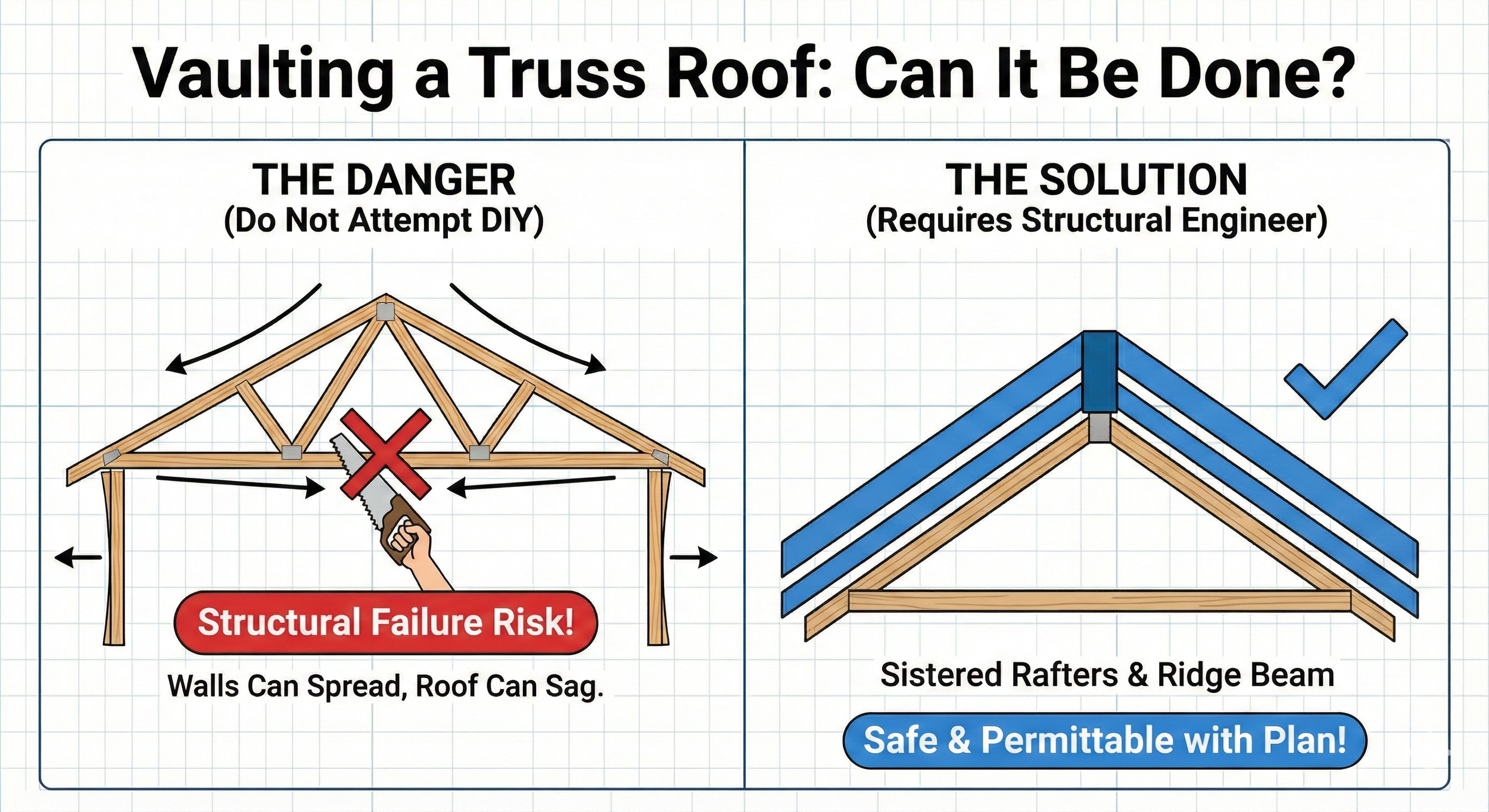
A standard roof truss is designed to carry its load through the entire "web" of the structure. The bottom chord (the part your ceiling is currently attached to) acts as a tension tie that keeps the exterior walls from spreading apart under the weight of the roof.
If you cut the bottom chord of a truss without a structural plan, the roof will begin to sag, and your exterior walls could literally blow outward.
Can It Be Done? Yes, But With a Plan.
While you can't simply "cut" your way to a vaulted ceiling, there is one common engineering path to get the look you want:
Sistering and Converting to Rafters: In some cases, we can design a system where we "sister" new, larger rafters alongside the existing trusses and install a new ridge beam. This beam takes over the load-bearing duties, allowing the old truss webbing to be removed.
Why You Need a Structural Engineer First
A truss is a precision-engineered component. Any modification—even drilling a large hole through a web member—can compromise its integrity. A structural engineer will:
Calculate the new load paths to ensure your walls can handle the pressure.
Provide a stamped framing plan that your contractor can follow to get the project through the building department.
Identify if you need a "Ridge Beam" (which supports the weight from the top) or "Collar Ties" (which hold the walls from the middle).
The Bottom Line
You can vault a ceiling with a truss roof, but it’s a surgical procedure, not a DIY demolition project. Cutting into a truss without an engineering plan is one of the fastest ways to cause permanent structural damage to your home.
Ready to open up your living space but not sure where to start with your roof structure? Let’s look at the best way to vault your ceilings safely.