Flitch Beams: How to Achieve an Open-Concept Layout on a Residential Budget
pen-concept floor plans remain one of the most highly requested features in residential remodeling. Homeowners want to knock down the walls dividing their kitchen, dining, and living spaces to create a single, expansive area filled with natural light.
But for general contractors and design-builders, removing a load-bearing wall introduces an immediate structural challenge: deflection and span limits.
When a wall comes down, a massive amount of weight from the floor or roof above must be transferred to a new horizontal beam. If the span is wide, standard dimensional lumber (like 2x10s or 2x12s) won't have the structural capacity to support the load. While an all-steel I-beam is the traditional heavy-duty solution, it often blows past the client's budget and introduces massive logistical headaches on-site.
Fortunately, there is a clever hybrid engineering alternative that bridges the gap between wood and steel: the flitch beam.
What is a Flitch Beam?
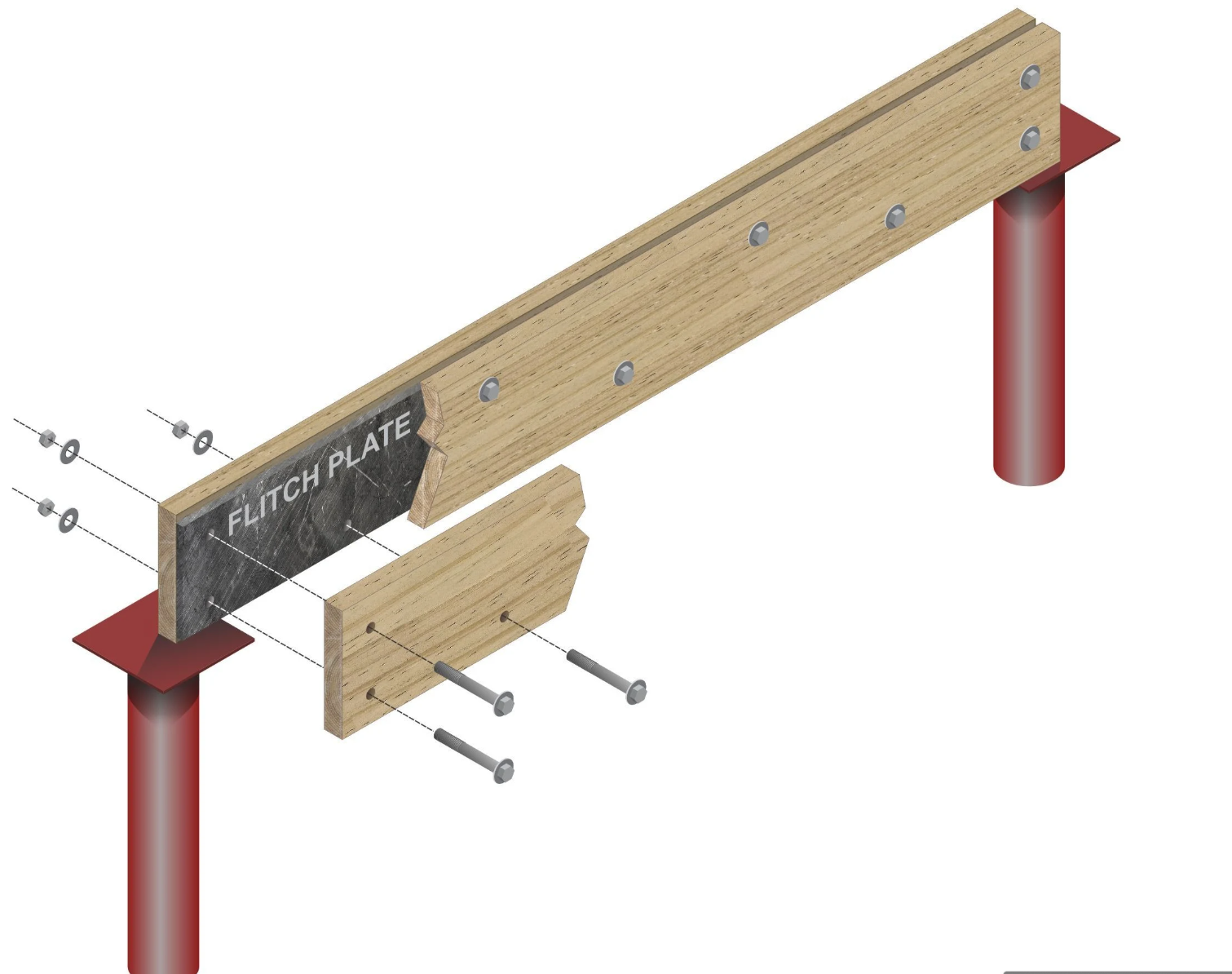
A flitch beam (sometimes called a flitch plate beam) is a structural sandwich. It consists of a vertical steel plate sandwiched tightly between two or more traditional wood framing members (such as dimensional lumber or Engineered Lumber like LVLs). The entire assembly is bolted together in a specific, engineered pattern.
By combining these materials, a flitch beam takes the best properties of both:
The Steel Plate: Provides immense stiffness, high load-bearing capacity, and drastically reduces deflection (sagging) over long spans.
The Wood Layers: Provide stability against lateral buckling and, crucially, allow carpenters to easily nail joists, hangers, and drywall directly into the beam using standard carpentry tools.
3 Reasons Contractors and Builders Prefer Flitch Beams
While structural steel I-beams have their place in heavy commercial construction, flitch beams offer significant advantages for residential remodels and additions.
1. No Crane or Heavy Rigging Required
An all-steel I-beam is incredibly heavy. Installing one typically requires renting a material lift or hiring a crane crew to maneuver the steel into the house—a logistical nightmare if you are working inside an occupied home or a tight backyard.
Because a flitch beam is assembled on-site, a standard carpentry crew can carry the individual pieces into the house by hand. You walk the wood in, slide the relatively thin steel plate into place, bolt it all together right on your temporary shoring walls, and lift it into position without heavy machinery.
2. Standard Carpentry and Fastening
An all-steel beam requires specialized installation methods. To attach wood ceiling joists to a steel I-beam, you usually have to pack out the steel web with wood blocking, bolt through the steel, or use specialized top-flange hangers.
With a flitch beam, the exterior faces are standard wood. Your framing crew can use standard joist hangers, face-nail rim joists, and screw drywall directly to the bottom of the beam. It eliminates the need for on-site welding or specialized steel-to-wood fasteners.
3. Flush Ceilings and Slim Profiles
To match the strength of a flitch beam, an all-wood option (like a massive glulam or multiple plies of LVL) has to be incredibly deep—often 14 to 18 inches or more. If you try to hide a beam that deep inside a ceiling cavity, you end up having to drop the ceiling height, destroying the flush, seamless look the architect designed.
Because steel is significantly denser and stiffer than wood, a flitch beam can handle massive loads while maintaining a much shallower depth (matching standard 9.25-inch or 11.25-inch joist depths). This allows you to tuck the beam completely up into the ceiling cavity for a perfectly flat, uninterrupted ceiling line.
The Flitch Beam Engineering Checklist
(Planning an open-concept remodel? Consider these factors. If you check these boxes, a flitch beam might save your project budget.)
Flush Ceiling Requirement: The architectural design demands a completely flat ceiling with zero dropped headers or exposed soffits.
Restricted Job Site Access: The home is located on a narrow street, steep hill, or has tight interior hallways that prevent a crane or pre-assembled steel beam from entering.
Long Span, Heavy Load: You are removing a major load-bearing wall spanning 15 to 25 feet that supports a second story, a heavy tile roof, or complex attic framing.
Tight Framing Schedule: You want to avoid waiting weeks for a specialized steel fabricator and prefer a solution your existing framing crew can assemble on-site in a single afternoon.
How APE Optimizes Framing Plans
At APE Structural Engineering, we don't just design structures to pass code—we design them to be practical for the people building them.
When we specify a flitch beam, we provide a precise bolting schedule, defining the exact spacing, diameter, and grade of the bolts required to ensure the wood and steel act as a single, cohesive unit. We calculate the exact thickness of the steel plate (whether 1/4-inch, 1/2-inch, or more) to maximize stiffness while keeping material costs as low as possible.
If you are trying to open up a floor plan without breaking the bank or complicating your construction logistics, reach out to the team at APE. We will look at your architectural plans, run the structural calculations, and help you determine if a flitch beam is the smartest path forward for your project.