When to Use Helical Piles for Foundations
Building an Accessory Dwelling Unit (ADU) or a home addition on a tight, zero-lot-line property in Los Angeles, San Diego, or the Bay Area is an incredible way to maximize property value. But logistically, it can quickly turn into a construction nightmare.
If you are a contractor or architect trying to design a foundation in a restricted backyard, you run into immediate roadblocks. How do you get a massive excavator or a traditional drilling rig past a four-foot side yard setback? How do you dig deep footings right next to a neighbor's aging foundation without risking structural shifting or settling?
When traditional over-excavation is physically impossible or financially draining, helical piles (also called helical piers) are often the best engineering solution. Let’s look at exactly what helical piles are and when they make the most sense for restricted-access California builds.
What Are Helical Piles?
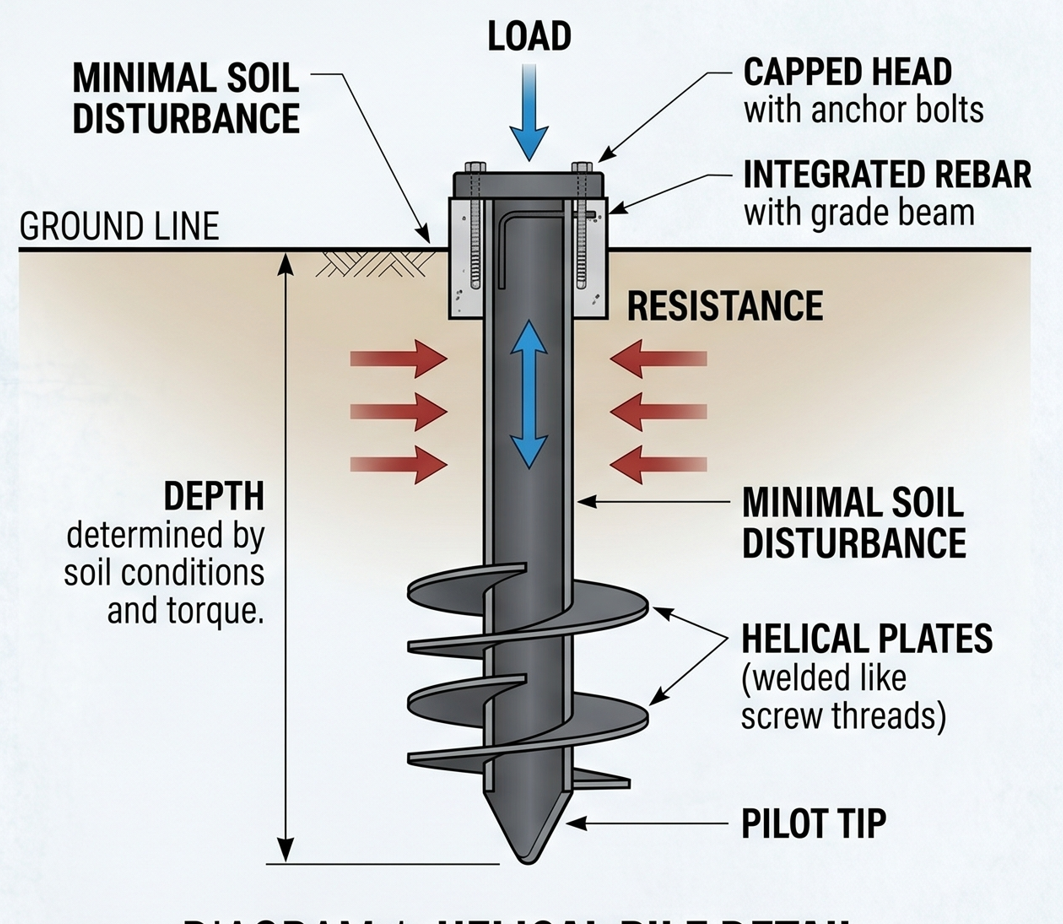
Think of a helical pile as a heavy-duty, giant steel structural screw. Instead of digging a massive hole and pouring tons of concrete, an installer uses specialized, compact hydraulic machinery to literally screw these steel shafts deep into the earth until they hit a stable, load-bearing soil layer.
Each pile features a central steel shaft with one or more helical plates (which look like propeller blades or screw threads) welded to the bottom. Once driven to the correct depth and torque specified by a structural engineer, the top of the pile is capped and tied directly into the building's concrete grade beams or foundation.
4 Scenarios Where Helical Piles Excel on Tight Lots
While a traditional poured-concrete foundation works perfectly for a wide-open suburban lot, helical piers become the clear winner when site conditions get complicated.
1. Extremely Tight or Restricted Access
If you are building an ADU in a tight urban backyard, getting heavy yellow equipment to the job site can be impossible without tearing down the main house or paying for an incredibly expensive, high-reach crane. Helical piles can be installed using small, track-mounted mini-excavators or even handheld hydraulic equipment. If a crew can walk through a standard garden gate, they can usually install a helical pile foundation.
2. Zero-Tolerance for Foundation Vibration
Traditional driven piles create massive ground vibrations that can crack neighboring stucco, damage historical structures, or cause unreinforced masonry foundations to shift. Helical piles are rotated into the ground quietly and smoothly. There is virtually zero vibration, making them incredibly safe for dense neighborhoods where homes are separated by just a few feet.
3. High Groundwater or Poor Soil Quality
In coastal areas or regions with high water tables, digging a deep, traditional foundation hole means dealing with caving soil and constant water pumping. Helical piles cut right through water-saturated or weak topsoil to anchor directly into solid bearing strata deep below, completely bypassing the need to muck out wet trenches.
4. Zero Soil Export and Minimal Site Disruption
Excavating for a standard foundation generates truckloads of dirt that must be hauled away—a logistical headache on narrow, congested city streets. Because helical piles displace soil rather than removing it, there is virtually zero dirt to export. Your site stays clean, and you save thousands on dump fees and hauling logistics.
The Helical Pile Project Checklist
Planning a tight-lot build or backyard ADU? Run through these site conditions. If you check any of these boxes, helical piles are likely your best path forward.
Access Restrictions: Side-yard clearances or overhead obstacles prevent standard excavation or drilling equipment from reaching the building pad.
Proximity to Neighbors: The new foundation sits directly against an existing property line, fence, or neighboring structure that cannot handle heavy ground vibrations.
Soil Conditions: The site features weak, expansive clay or a high water table that makes open trenching dangerous or impractical.
Speed Requirements: The project timeline is tight; helical piles can be loaded immediately after installation, completely eliminating the 28-day cure time required for traditional concrete piers.
How APE Optimizes Foundation Designs
At APE Structural Engineering, we look at projects through both an engineering lens and a builder’s lens. Engineering a foundation isn't just about making sure a structure stays up; it’s about making sure it can actually be built given the physical realities of the site.
When we specify helical piles, we calculate the exact depth, diameter, and torque requirements necessary to meet strict California seismic and structural codes. This ensures your foundation is fully optimized, keeping material costs down, preventing installation guesswork, and keeping your project moving forward without a hitch.
If you are staring down a tight lot or a difficult access challenge on an upcoming project, reach out to the team at APE. We’ll analyze your site plan and soil report to help you deploy the smartest, fastest foundation strategy possible.