History of Structural Engineering: How the Elevator Changed Everything
Let’s be honest: nobody wants to walk up ten flights of stairs. Not today, and certainly not in 1850 in full Victorian attire.
When we look at a city skyline, it’s easy to credit steel and reinforced concrete for the massive towers we see. And sure, as structural engineers, we love a good steel W-section. But the truth is, the materials existed long before the skyscrapers did.
So, what was holding us back? It wasn’t just gravity; it was human endurance.
Before the mid-19th century, buildings were generally capped at about five or six stories. Why? Because anything higher was just a cruel cardio workout. The top floors of buildings—now the prime penthouse real estate—were actually the cheapest, most undesirable spots because you had to haul yourself (and your groceries) up there.
But the desire to build up was always there, especially as cities became crowded. The thing that finally allowed structural engineers to push the envelope wasn't a new beam; it was a new way to move people.
The "Fat Wall" Problem (The Pre-Elevator Era)
Before we could build high, we had to solve a major structural headache: load-bearing masonry.
For centuries, if you wanted a tall building, you used stone or brick. The walls held up the floors. The higher you went, the heavier the building became. To support all that weight, the walls at the bottom had to get thicker and thicker.
A perfect example is the Monadnock Building in Chicago. At 16 stories, it's one of the tallest load-bearing masonry buildings ever constructed.
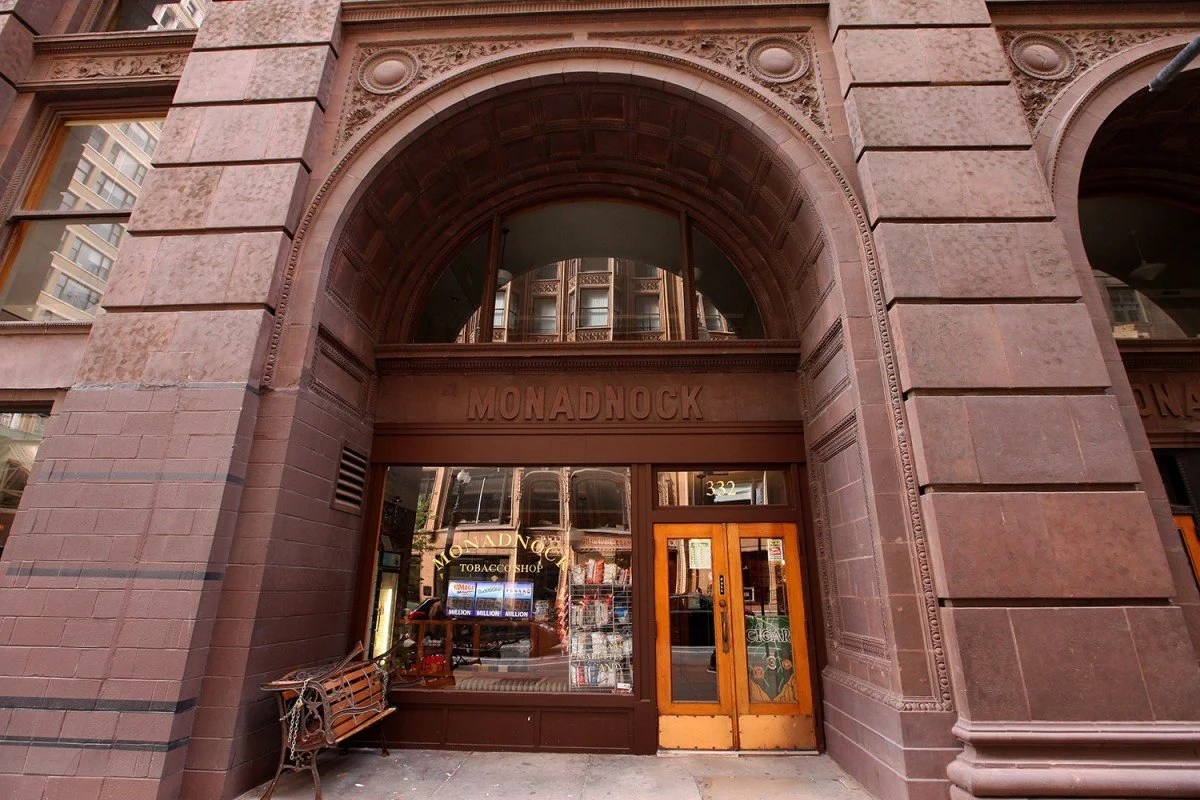
The Monadnock Building pushes the limits of masonry. To support its 16 stories, the walls at the street level are a whopping six feet thick
For architects, this was a nightmare. Six-foot-thick walls meant dark, cramped ground-floor retail spaces and massive limitations on window sizes. You couldn't just build a 50-story building this way—the bottom floor would just be solid rock.
Enter Elisha Otis (and the end of "Leg Day")
Elevators, or hoists, had existed for a long time, but they were dangerous. Ropes snapped. People died. They were mostly used for freight.
In 1854, at the Crystal Palace Exposition in New York, Elisha Otis changed everything. He stood on an elevator platform high above the crowd and ordered the only supporting rope cut. Instead of plummeting to the ground, the platform dropped a few inches and stopped dead. His "safety brake" worked.
The public realized they wouldn't die on the way to the 10th floor. Suddenly, verticality was viable.
The Structural Revolution: From Shells to Skeletons
Once the elevator solved the "human transport" issue, architects immediately demanded taller buildings. Structural engineers had to figure out how to ditch those six-foot-thick stone walls.
The solution was a total paradigm shift: The Steel Frame.
Instead of the exterior walls doing all the heavy lifting, engineers began designing internal "skeletons" of steel columns and beams to carry the load to the foundation.
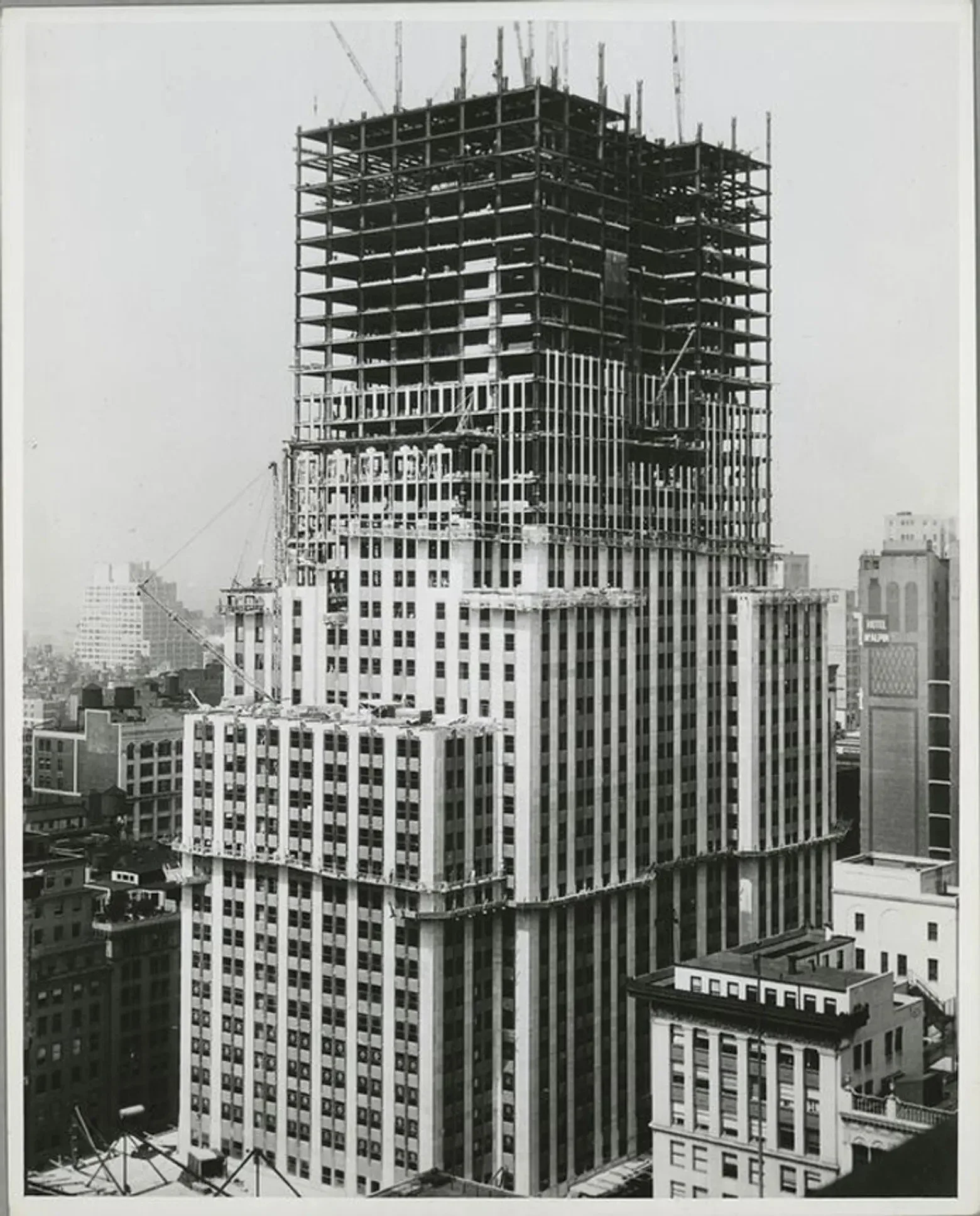
The "bones" of a city. Once steel frames took over the load-bearing duties, buildings could reach unprecedented heights.
This liberated the architecture. The exterior walls didn't need to support the building anymore; they just needed to keep the weather out. This gave birth to the curtain wall—the glass and lightweight facades that define modern cities.
Suddenly, the sky wasn't just a limit; it was a dare.
Integration is Everything
At APE Structural Engineering, we love this history because it proves a vital point: structure doesn't exist in a vacuum. The invention of a mechanical system (the elevator) completely revolutionized our structural systems.
Today, we work closely with architects to ensure that mechanical needs—from high-speed elevator banks to massive HVAC units on the roof—are integrated seamlessly into the structural design. We don't just make sure the building stands up; we make sure it works for the people inside it.
Whether you're designing a boutique 5-story mixed-use project or retrofitting a classic, we’re here to help you reach new heights (without taking the stairs).
Ready to elevate your next project? . Contact APE Structural Engineering today to discuss your vertical vision.